Emergency and Preparedness Water Filters: How to Choose the Right One
Jerome StolzClean water is easy to take for granted until the day it stops coming. One broken water main or a night of heavy flooding is all it takes to leave you without safe tap water. Because of this, having a way to make untreated water safer to drink is important.
An emergency water filter removes many of the contaminants commonly found in untreated water. Compact and easy to use, it’s one of the simplest ways to prepare for unexpected disruptions.
This guide explains how emergency water filters work, why water becomes unsafe during emergencies, the different types available, and how to choose the right one for your needs.
What Is an Emergency Water Filter?
An emergency water filter is a device that makes water safer to drink when your usual supply is unavailable or unsafe. It is especially useful during power outages, floods, natural disasters, and boil-water notices.
It works through a simple physical filtration process. As water flows through the filter, contaminants are trapped inside, leaving cleaner, safer water on the other side.
Not all emergency water filters remove the same contaminants. Some models remove bacteria and protozoa, while others also reduce viruses and additional contaminants. The right choice depends on your water source, the contaminants you are most likely to encounter, and the emergencies you are preparing for.
Why Does Water Become Unsafe During Emergencies?
During an emergency, the systems that normally keep drinking water safe can fail or become damaged. As a result, contaminants may enter the water supply, making it unsafe to drink without treatment.
Common causes of water contamination during emergencies include:
-
Flooding: Floodwater can overwhelm sewage systems and carry contaminants into rivers, lakes, groundwater, and even drinking-water supplies.
-
Power outages: Water treatment plants and pumping stations may stop operating or lose pressure, increasing the risk of contamination.
-
Damaged infrastructure: Burst pipes and damaged water mains can allow dirt, bacteria, and other contaminants to enter the drinking-water supply.
-
Improper water storage: Emergency water stored in unclean containers or left unsealed for long periods can become contaminated.
Most contaminants found during emergencies fall into two main categories:
Biological Contaminants
Biological contaminants are living organisms, which include bacteria such as E. coli, protozoan parasites such as Giardia and Cryptosporidium, and viruses such as norovirus and rotavirus.
These microorganisms can cause gastrointestinal illness and are among the most important hazards in untreated water during emergencies. Some, including Cryptosporidium, are highly resistant to chlorine disinfection, which is why filtration plays an important role in making contaminated water safer to drink.
Chemical Contaminants
Floodwater, industrial runoff, and other pollution sources can introduce chemical contaminants into untreated water. These include substances such as fuel, pesticides, heavy metals, and industrial chemicals.
Unlike biological contaminants, most dissolved chemicals pass through standard emergency water filters. Activated carbon can reduce some of them, but heavy metals and salts usually require reverse osmosis or another safe water source.
Different contaminants require different treatment methods, so understanding the likely source of contamination helps you choose the safest option.
4 Types of Emergency Water Filters
There are four main types of emergency water filters. The best one for you depends on how much water you need, how many people you're supplying, and whether you're preparing for an emergency at home or on the move.
| Filter Type | How It Works | Best For | Main Limitation |
|---|---|---|---|
| Straw filter | Drink directly from the water source through the filter | Emergency kits, backup use, ultralight travel | Cannot store or share filtered water |
| Squeeze or press filter | Squeeze or press water through the filter into a bottle or container | Bug-out bags, travel, individual use | Requires manual effort to filter water |
| Pump filter | A hand pump forces water through the filter cartridge | Frequent use, groups, murky water | Heavier and has moving parts |
| Gravity filter | Water flows through the filter using gravity alone | Families, home preparedness, group use | Bulkier than other portable filters |
Which Emergency Water Filter Should You Choose?
The right emergency water filter depends on what kind of situation you're preparing for. For example, a filter that's ideal during a power outage may not be the best choice for floodwater or an evacuation. Use the guide below to find the option that best fits your needs.
1. Home preparedness
Best choice: Gravity filter or high-capacity filtration system
If you're preparing to stay at home during an emergency, you'll need enough safe drinking water for the whole household. A gravity filter or another high-capacity system is usually the most practical choice because it can produce several litres at a time without electricity or constant effort.
2. Bug-out bags
Best choice: Squeeze filter, press filter, or straw filter
When you're carrying everything on your back, you want a filter that won't weigh you down. A squeeze, press, or straw filter is lightweight, requires no power, and lets you treat water on the move. Choose one that is durable, easy to use, and compatible with standard bottles.
3. Flooding
Best choice: Water purifier or filter combined with a secondary treatment method
Floodwater presents one of the highest risks of contamination. It can contain sewage, agricultural runoff, fuel, chemicals, and other pollutants. Because both biological and chemical contaminants may be present, a filter alone may not provide enough protection. Use it alongside boiling, chemical disinfection, or another safe water source whenever possible.
4. Power outages
Best choice: A non-electric filter (plus boiling if a boil-water notice is in effect)
A power outage does not always make the water unsafe, but it can disrupt treatment and reduce water pressure, increasing the risk of contamination. A non-electric water filter is a reliable backup for these situations. If a boil-water notice has been issued, boil the water or use an appropriate purifier, as standard filters do not remove viruses.
5. Family emergency kits
Best choice: Combination of a home filter and a portable filter
Families need a solution that can produce enough water for multiple people. A larger gravity filter is well suited to daily household use, while a compact squeeze or straw filter is useful if you need to leave home quickly.
6. Apartment preparedness
Best choice: Compact gravity filter or countertop filtration system
Apartment living often means limited storage space and no easy access to natural water sources. A compact gravity filter or a countertop system for treating stored water is usually the most practical option.
Secure Clean Drinking Water Without a Power Supply
1,500 liters of capacity per filter, discover the crisis-proof solutions from BACHGOLD.
EXPLORE NOW →Mistakes to Avoid When Using an Emergency Water Filter
Most water filter failures come down to poor preparation, not the filter itself. More often than not, the problem is how it's used, stored, or maintained.
1. Assuming a filter solves every water problem
A standard emergency water filter removes bacteria and protozoa, but it does not protect against every type of contamination. Viruses, chemical pollutants, and heavy metals may still be present. That's why it's important to match the treatment method to the likely contaminants in the water.
2. Forgetting to store an emergency water supply
Don't rely on a filter alone. In the early hours of an emergency, finding water to filter may be harder than you expect. Keep enough drinking water stored for those first critical hours, then use your filter once you need to replenish your supply.
3. Focusing only on micron size
It's easy to assume that a smaller micron rating means a better filter, but that's not always true. What really matters is whether the filter has been independently tested to remove the contaminants it claims to filter. Check for recognised standards, laboratory testing, and published performance data instead of judging a filter by its micron rating alone.
4. Letting the filter freeze
Water trapped inside the hollow fibres can freeze, expand, and create tiny cracks that permanently damage the filter. The filter may look perfectly fine afterwards, but once those fibres are damaged, it can no longer be relied on to remove contaminants as intended.
5. Filtering cloudy water without pre-treatment
Cloudy water carries a lot of suspended sediment, which can quickly clog a filter and make it much harder to use. Before filtering, let the sediment settle to the bottom or strain the water through a clean cloth or coffee filter. This simple step helps maintain the flow and reduces how often the filter needs cleaning.
6. Having no backup treatment
It's always worth having a backup. A filter may clog, become damaged, or simply be the wrong tool for the water you're dealing with. Keep a second treatment option on hand, such as the ability to boil water or chlorine dioxide tablets.
The Best Approach: Use More Than One Layer of Protection
A reliable emergency water plan doesn't depend on a single solution. Instead, combine a few different methods so each one covers the others' limitations.
-
Store enough drinking water for immediate needs.
-
Keep a water filter ready to treat additional water as needed.
-
Have a backup treatment method, such as boiling or chlorine dioxide tablets.
Together, these layers make your water supply more reliable, no matter how the situation changes.
Bachgold® Water Filters for Emergency Preparedness
When you're preparing for an emergency, reliability matters just as much as convenience. Bachgold® water filters are designed to provide safe drinking water during power outages, supply disruptions, outdoor adventures, and other situations where clean water may not be available. Our filters rely on physical filtration so they’re ready to use whenever you need.
Each filter uses a 0.2 µm hollow fibre membrane, fine enough to physically trap bacteria and protozoa so they cannot pass through your water. What’s more, each replacement filter can handle up to 1,500L before you swap it.
Bachgold® water filters were tested by independent laboratories according to the NSF P231 testing protocol and fulfilled the corresponding requirements. In that testing, we achieved a LOG 8 reduction of E. coli, which equals a 99.999999% reduction. All materials are BPA-free.

Bachgold® Selfpress
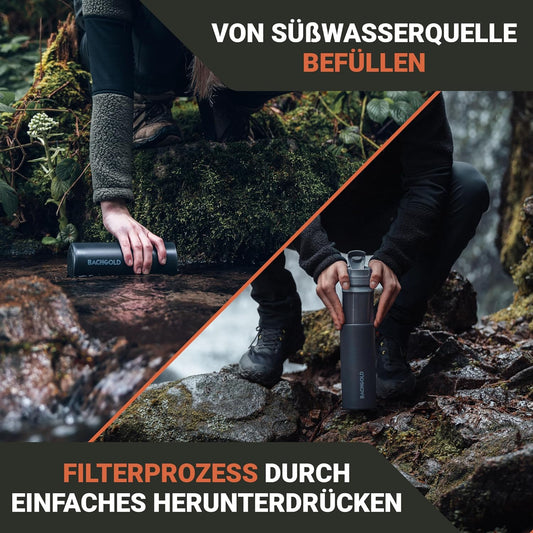
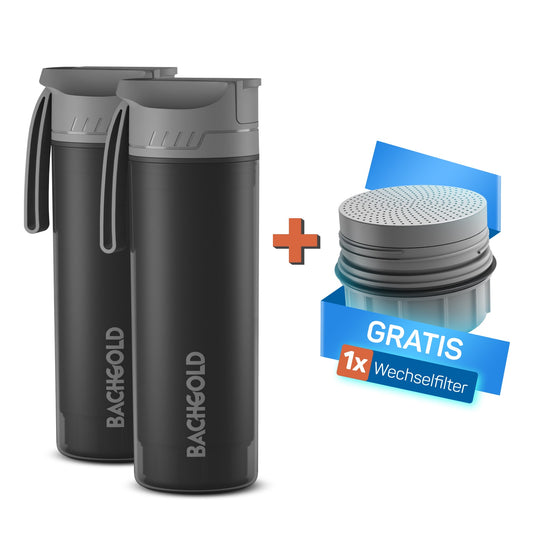
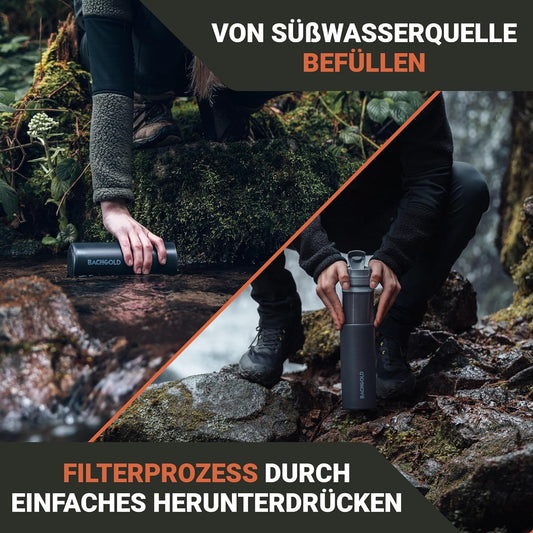
The Bachgold® Selfpress combines a water bottle and filter in one compact unit, making it easy to produce safer drinking water wherever you are. Simply fill, press, and drink. It removes bacteria and protozoa, offers a reduction of viruses, and is well suited to emergency kits, travel, and everyday carry.
Bachgold® SQ (Squeeze)
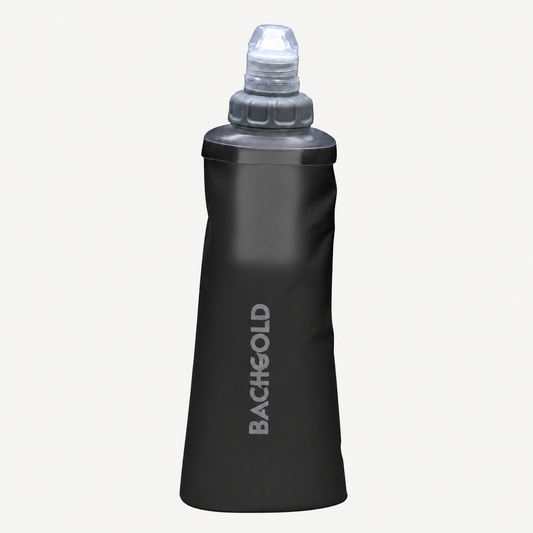
The Bachgold® SQ is built for situations where you need safe drinking water quickly. Fill, squeeze, and drink in under 30 seconds, with no electricity or bulky equipment required. It removes bacteria and protozoa while also providing highly effective protection against viruses, making it well suited to emergency kits, bug-out bags, and outdoor adventures.
Bachgold® Straw
The Bachgold® Straw is the ultralight backup for when every gram counts. At just 60 g, it slips into an emergency kit, glove box, or hip belt. Insert it straight into a stream, lake, or puddle and drink through it in real time, with no container, no squeezing, and no setup.
A Layered Approach to Emergency Water Safety
Bachgold® water filters are designed to be an important part of your emergency water plan. For the best level of preparedness, combine your filter with stored drinking water and a backup treatment method. That way, you'll be ready for a wider range of conditions and have a more reliable source of safe drinking water when it matters most.