Many outdoor water filters use activated carbon to improve the taste and smell of water from lakes, rivers, and streams. But activated carbon still has limits, since it can't reliably remove the bacteria and protozoa that natural water may carry on its own.
So what exactly is activated carbon, and how does it work?
What Is Activated Carbon?
Activated carbon, also called activated charcoal, is a material used to filter harmful chemicals out of water and air. It comes as black granules made from coal, wood, nutshells, or other carbon-rich materials.
Each granule is porous, with a large surface area inside and out. As water flows through, chemicals stick to these surfaces instead of staying in the water. In an outdoor water filter, this happens as water passes through a carbon stage, usually in a replaceable element or alongside another filtration step.
How Does Activated Carbon Work in an Outdoor Water Filter?
Activated carbon mostly changes how filtered water tastes and smells. As water flows through the filter, the carbon grains catch some of the compounds dissolved in it.
In an outdoor filter, that mainly helps with the following:
-
Earthy and musty tastes and odors: Compounds produced by certain algae and bacteria can give water these unpleasant characteristics.
-
Chlorine: Activated carbon can reduce the chlorine taste left in tap water or in water treated with chlorine-based purification tablets.
-
Some organic compounds: Tannins from decaying leaves and other plant material can give water a brown or tea-like color. Activated carbon can adsorb some of these compounds, although the amount of color removed depends on the filter.
Activated carbon works better when water moves through it slowly. The longer the water stays in contact with the carbon, the more time the carbon has to catch unwanted compounds. If you press or squeeze the filter very hard, the water rushes through faster, and the carbon has less time to work.
What Does Activated Carbon Not Remove?
Activated carbon by itself is not enough to treat water from a river, lake, or stream. Water can taste clean after passing through the carbon and still carry the bacteria and protozoa that can cause illness.
On its own, activated carbon does not reliably remove several types of contaminants:
-
Bacteria and protozoa: Pathogens such as E. coli and Giardia require a filter or treatment method designed to remove or inactivate them.
-
Viruses: Viruses are even smaller than bacteria, so removing them takes a filter specifically tested for viruses.
-
Sediment and silt: Fine particles cloud the water and quickly clog the carbon.
-
Some pesticides and heavy metals: Activated carbon can reduce many chemicals, but its effectiveness varies by substance and filter design.
If you are choosing a water filter for hiking or trekking, look for one that pairs activated carbon with a hollow fiber membrane. Many hollow fiber filters can remove bacteria and protozoa, while the carbon helps improve taste and odor. If you are heading somewhere with a higher risk of viruses, such as areas with poor sanitation, make sure that the filter is also tested for virus removal.
Why Water Source Matters for Activated Carbon Filters
The quality of your water source affects what an activated carbon filter can do. Before collecting water, check for signs of contamination and avoid sources that may carry harmful substances, even if the water looks clear.
Avoid collecting water from these sources:
-
Below towns or wastewater outlets: Sewage can enter the water even when the stream looks clear.
-
Downstream from farms, livestock, or industry: Runoff can carry manure, fertilizer, pesticides, and chemicals into the water.
-
Floodwater: Floods mix sewage, fuel, and debris from everything the water has passed over.
-
Water with algal blooms: Some algae release toxins that a portable filter cannot reliably remove.
-
Still pools near dead animals: Animal remains can contaminate nearby water with harmful microorganisms.
-
Water with a shiny film on top: A rainbow sheen usually means fuel or oil has entered the water.
If you suspect chemical pollution, find another source. Activated carbon can reduce some chemicals, but a portable filter cannot protect you against an unknown mix of fuel, pesticides, or industrial waste.
How Long Does Activated Carbon Last?
Activated carbon lasts until its surface fills up with the compounds it catches, so the lifespan depends on how much water you filter and how clean that water is. Murky or polluted water uses up the carbon faster than clear mountain water.
Changes in taste or smell may indicate that the carbon is becoming less effective, but they are not a dependable way to judge when it needs replacing. Follow the manufacturer’s instructions for filter replacement, cleaning, and storage.
Activated Carbon vs Hollow Fiber Membrane
Activated carbon and a hollow fiber membrane clean water in two different ways.
The table below compares what each stage does and what it lets through.
|
Activated carbon |
Hollow fiber membrane |
| How it works |
Holds dissolved compounds on its surface |
Blocks anything larger than its microscopic pores |
| What it removes or reduces |
Earthy tastes and odors, chlorine, some organic compounds |
Bacteria, protozoa, sediment, microplastics |
| What it misses |
Bacteria, protozoa, and sediment |
Dissolved chemicals, tastes and odors, and viruses unless the membrane is specifically built to remove them |
A hollow fiber membrane is a bundle of thin, hollow tubes with microscopic pores in their walls. Water passes through the walls, while microorganisms and particles too large for the pores stay behind.
Together, the two stages give you water that is safer and better tasting than either stage alone. Performance still depends on the filter’s design, so check which contaminants the complete product is tested to remove before relying on it to treat water from natural sources.
Choosing a Water Filter With Activated Carbon
When you compare outdoor water filters, the carbon stage shows you what to expect from the taste of the water, while the membrane decides whether that water is safe to drink. So check the product details for both stages, and make sure the membrane is tested against the microorganisms you are likely to meet on your route.
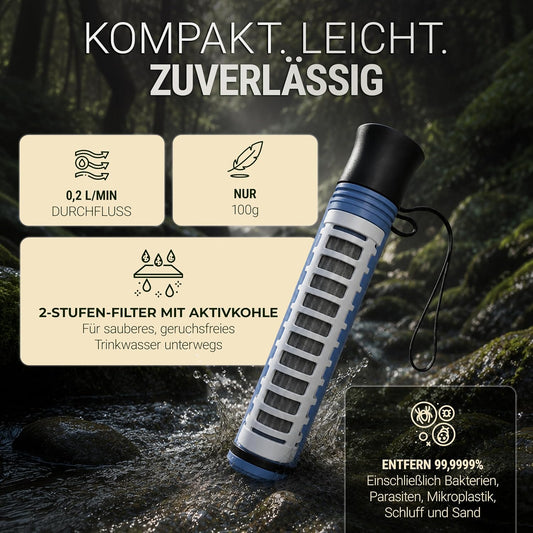
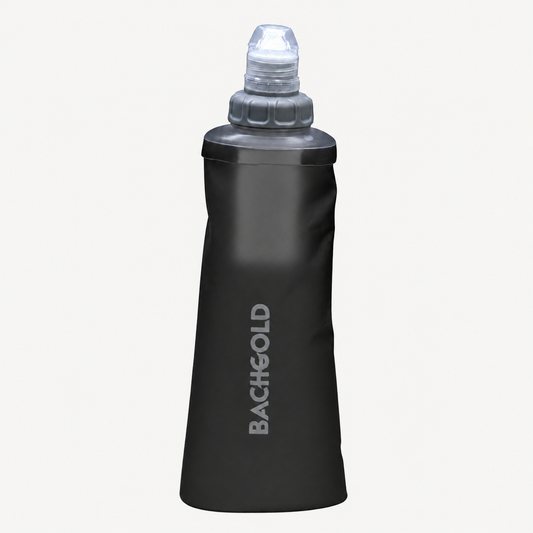
To cover both of those checks, every BACHGOLD filter pairs a hollow fiber membrane with an activated carbon stage. The membrane removes bacteria and protozoa without chemicals or batteries, and the carbon improves the taste of your water. If your route calls for virus protection, check out our Squeeze and Straw filters, which are effective against viruses.
Whichever filter you choose also supports clean water beyond the trail. Part of every purchase funds Viva con Agua’s drinking-water project in Nepal, which helps bring safe water into communities that need it.
Find Your Two-Stage BACHGOLD Filter →