Glacier water can look almost unreal. It's ice cold, perfectly clear, and flows straight out of the ice, so it's easy to assume water from somewhere this remote has to be safe.
But glacier water isn't automatically safe to drink. Even when it looks perfectly clear, it may contain microorganisms, sediment, or chemical contaminants that aren't visible to the naked eye.
If the water hasn't been tested or officially declared safe to drink, treat it before you drink it.
Is Glacier Ice Really Sterile?
A glacier is more than a frozen mass of water. As layers of snow accumulate and compress into ice, they can trap dust, soil, organic material, and microorganisms within the glacier.
Scientists have found diverse microbial communities living inside glacier ice. Research on Alaska's Kahiltna Glacier even found that fecal bacteria linked to human waste can stay viable in a glacial environment. That study considered the health threat fairly minor in its specific setting, but it still showed that freezing doesn't kill off every microorganism.
That doesn't mean every glacier is hiding dangerous ancient pathogens. That idea makes for a better headline than a real risk. For us hikers, the more realistic concerns are contamination from people, animals, and the surrounding landscape.
Where You Collect the Water Changes the Risk
As glacier ice melts, the water can pick up different materials depending on where it flows. Water running across the surface of the ice comes into contact with surface debris, while water emerging from beneath the glacier may carry sediment from the ground below.
| Source |
What to consider |
Recommended action |
| Surface meltwater |
Dust, animal activity, climber waste, and microorganisms in the ice or surrounding environment |
Collect away from visible contamination and treat before drinking |
| Water emerging from beneath the glacier |
Heavy sediment, material carried from under the ice, and upstream conditions that are hard to assess |
Let sediment settle, pre-filter, then treat the water |
| Glacier-fed stream downstream |
Potential contamination from animal waste, human activity, and the surrounding landscape |
Check the surrounding area and collect from the cleanest available source |
| Water near a campsite or popular route |
Higher chance of fecal and surface contamination |
Move upstream or choose another source |
Collecting water close to the ice doesn't guarantee it's safe. Still, water that has traveled farther downstream has usually had more chances to pick up contaminants along the way. The safest approach is to assess the surroundings and treat untreated water before drinking, regardless of where you collect it.
What Could Be in Glacier Water?
1. Bacteria and parasites
When you're collecting water from a glacier, especially one that's traveled down through a stream or two, human or animal feces can get into it and bring bacteria and parasites along for the ride.
You won't be able to see any of it, and that's the real problem. Even the CDC warns that clear mountain water can still carry these germs. Water doesn't need to look dirty or smell off to make you sick.
Hazards like Giardia, Cryptosporidium, and other disease-causing bacteria can cause problems like gastrointestinal illness. It’s better to treat your water before you drink it than deal with the fallout later.
2. Viruses
Viruses can get into glacier water the same way bacteria do, through human waste. Virus contamination is most likely near settlements, busy campsites, popular climbing routes, or anywhere sanitation is poor.
The tricky part is that viruses are a lot smaller than bacteria and protozoa. Most portable microfilters that do a solid job on bacteria and parasites still won't catch them reliably.
If you're collecting near a spot like that, make sure your water filter is rated specifically for virus removal, or pair your filter with a disinfection step so nothing slips through.
3. Glacial sediment
Glaciers spend years grinding the rock underneath them into incredibly fine particles, often called glacial flour. The flour stays suspended in the water and gives glacier-fed rivers their gray, milky, almost turquoise look. It's not automatically dangerous, but it'll clog your filter fast and leave your water tasting like rock dust.
Cloudy water can also mess with UV treatment, since the particles can shield microorganisms from the light. So if you're going that route, let the water settle first, filter, then boil the water to make sure it is safe to consume.
4. Chemical contaminants
Glacier water isn't just melted ice. It naturally contains dissolved minerals and can also pick up pollution from the surrounding watershed, including runoff from mining or agricultural activity, wastewater, and fuel spills.
Boiling kills disease-causing microorganisms, but it doesn't remove harmful chemicals such as pesticides, heavy metals, or dissolved salts. It also won't make water contaminated with fuel or radioactive materials safe to drink. So if the water smells off, has an oily sheen, or sits near mining or industrial activity, just skip it and look for another source.
How to Treat Glacier Water Outdoors
Treating glacier water isn't one single step. It's a handful of small decisions that add up once you know what to look for, starting with where you collect it.
1. Start With the Best Available Source
First, look for freshwater that's clear and moving, and take a second to check what's upstream before you fill up. Try to collect above campsites, grazing areas, and busy crossing points whenever you can.
If there's a flowing source nearby, skip the stagnant pools entirely. You should also steer clear of any water with visible waste, dead animals, algae, or anything that looks like chemical pollution.
2. Let Cloudy Water Settle
If your water's carrying glacial sediment, pour it into a separate container and give the heavier particles time to settle out. Then carefully pour the clearer water off the top through a clean cloth or a pre-filter.
This takes some pressure off your main filter, but it won't get rid of the microscopic pathogens on its own, so don't skip the next step.
3. Filter According to the Actual Risk
Before you head out, do a little research on the water along your route. Looking into the local water conditions ahead of time tells you what you're actually dealing with. If the main concerns are bacteria, parasites, and sediment, a standard filter paired with boiling will usually have you covered.
But if viruses are a real possibility at your source, make sure your filter can reduce viruses before you treat the water any further and drink it.
4. Boil when broader germ protection is needed
Some sources need more than a filter, especially water below a busy campsite or in an area with poor sanitation. Many standard microfilters are not designed to catch viruses, so boiling the water or adding a chemical treatment after filtering handles the viruses the filter may miss.
In those situations, filter first, then follow up with a disinfection method. Bring clear water to a rolling boil for one minute, or three minutes above roughly 6,500 feet, which matches what the CDC recommends for broader protection. It's also a solid backup if your filter gets damaged or compromised by freezing. Just remember that it won't remove sediment, fuel, pesticides, or heavy metals.
5. Keep clean and untreated water separate
Don't let your dirty-water container, the filter inlet, or unwashed hands touch the clean side of your setup. It's a small thing, but it's exactly the kind of mistake that reintroduces microorganisms right after you've already filtered them out.
Can an Outdoor Water Filter Treat Glacier Water?
Yes, a good outdoor water filter can handle freshwater collected from a glacier-fed source, provided it's designed to remove the contaminants present. The first thing to check is how the filter works and what it can remove.
Most filters use a fine membrane to remove bacteria, protozoa, and suspended particles, while an activated carbon stage helps improve taste and smell. However, fine sediment in silty glacier water can clog the membrane and slow the flow. Letting the sediment settle first, as explained earlier, can help prevent clogging and keep water flowing more easily.
So, Should You Drink It?
Glacier water is not automatically unsafe, but it is also not without risks. Some of it could carry something you'd rather not find out about later.
What actually matters is where the water came from and how you treated it, not what it looks like in your bottle. Pick the cleanest source you can find, settle out the sediment, and treat for whatever risks that source actually carries.
Pick the Right Filter for Glacier Water
Glacier water may carry bacteria, parasites, and fine sediment, which can pose several health risks. A good hollow fiber filter is built to handle all three. Viruses are harder to remove with most portable filters, so take extra care when collecting water downstream of campsites or settlements, where human waste may contaminate the source.
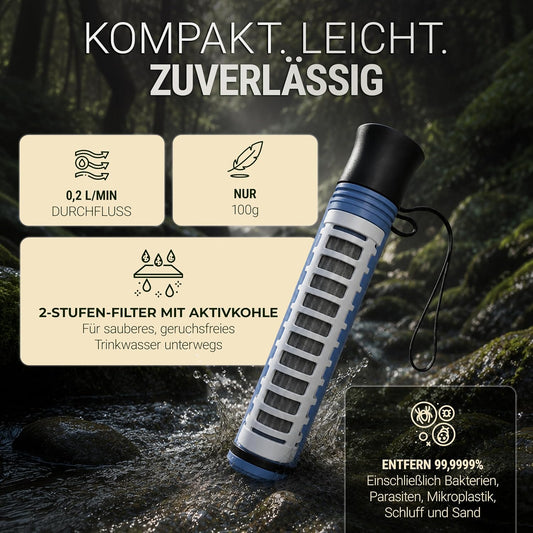
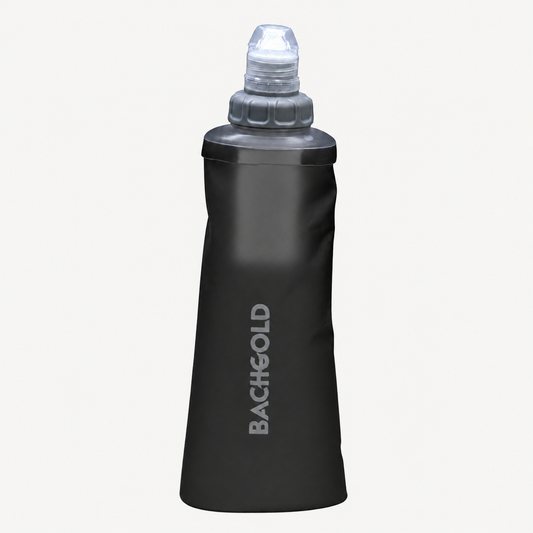
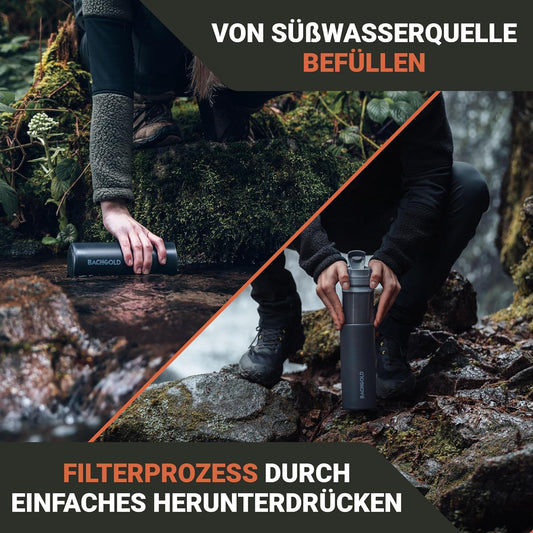
Every BACHGOLD filter removes bacteria and protozoa, so the parasites and bacteria in glacier melt are covered whichever model you pick. If you often fill up near campsites or settlements, our Squeeze and Straw filters are highly effective against viruses too. All of them work without chemicals or batteries, straight from the stream.
Shop the BACHGOLD filter today →