Hiking in the Rain: How to Stay Safe, Warm and Comfortable
Impactive AnalyticsA rainy forecast can still mean a good day on the trail. Light rain usually keeps the crowds away and cools the air, which makes long climbs easier. Familiar paths also look different, with mist in the trees and water running over the rocks.
However, rain can also make the trail more challenging. Wet rocks and roots become slippery, while streams can rise quickly after heavy rain. Rain can soak your clothes, too, and wet clothing draws heat away from your body much faster than dry clothing. As a result, you can get cold even when temperatures are well above freezing.
This guide will show you how to prepare for these conditions and how to tell when it’s time to turn back.
Is It Safe to Hike in the Rain?
Hiking in light or moderate rain is usually safe, as long as you have waterproof layers and a route that matches your experience. Heavy rain carries more risk, especially when it brings thunderstorms, flooding, or strong wind.
Start with the forecast. The National Park Service advises checking the weather and any local alerts before you head out, and having a backup plan ready if conditions are not ideal.
A full forecast covers much more than the chance of rain, so look at these details for your route:
-
Rain intensity and duration.
-
Recent rainfall, since earlier rain can keep streams high and the ground soft.
-
Thunderstorm warnings.
-
Wind speed and gusts.
-
Temperature.
-
Visibility.
-
Flood, landslide, or trail closure alerts.
Check the forecast for the highest point on your route, not only the trailhead. Higher up, the air is colder and often windier, so conditions near the top can be much harsher than at the trailhead.
When Does Rain Turn Dangerous for Hikers?
Rain turns dangerous for hikers when it comes with thunderstorms, triggers flash floods, or loosens steep slopes. With thunderstorms, the danger is lightning, which can strike before the storm is directly overhead.
The US National Weather Service warns that there is no safe place outside when thunderstorms are in the area. It also notes that if you can hear thunder, you are likely within striking distance. So if thunderstorms are forecast for your route, reschedule the hike for another day.
Besides thunderstorms, heavy rain can also be dangerous on its own, even without a storm. This is because water collects quickly in narrow valleys and gorges, so a flash flood can arrive from rain that fell miles upstream. The same water soaks into steep slopes, where saturated soil can slide and loosen rocks from above.
What Makes a Good Route for a Rainy-Day Hike?
A good rainy-day route is usually shorter and more sheltered than one you would pick for a dry day. Forest trails often give good shelter, since the trees block some of the wind and rain. However, in case of strong wind, branches can break and fall, so check the wind forecast before you choose a route through the trees.
Stream crossings are another thing to consider when choosing a route for a rainy-day hike. On an out-and-back route, every stream you cross on the way in has to be crossed again on the way out. By then, hours of rain may have made the water deeper and faster. A trail that crosses the same stream several times gives rising water several chances to cut you off, so a route with fewer crossings is easier to manage.
If this is your first hike in the rain, pick a route you already know well. A familiar trail lets you focus on the weather and your footing instead of finding the way. You will also notice sooner when a stream is higher, or the path is wetter than usual.
When choosing a route, look for these features:
-
Clear trail markings that are easy to follow in fog or low light.
-
Little time on open ridges or summits.
-
Bail-out points where you can turn back early.
-
Phone signal, or a hut or shelter along the way.
-
A trail surface that drains well, such as gravel, instead of clay that turns into slick mud.
Before you leave, tell someone who isn’t coming along where you are going and when you expect to be back. If you are late, that person can raise the alarm and tell rescuers where to start looking.
When Should You Skip a Stream Crossing?
Skip a stream crossing when the water is flooding or fast-moving, or when you are unsure of its depth. Moving water is stronger than it looks and can knock you off your feet even at a shallow crossing.
If a crossing looks worse than you expected, trust what you see over what the map shows. A map can show where the trail crosses, but it cannot show today’s water level. Streams are also usually deepest and fastest in the middle, so the edge closest to you gives a poor picture of the rest.
When a crossing looks unsafe, turn back or take a route you already know. Waiting is another option, since streams swollen by a short burst of rain often drop again within a few hours.
What Should You Wear While Hiking in the Rain?
On a rainy hike, you want at least three layers that each do one job. A base layer moves sweat off your skin, a mid-layer holds warmth, and a waterproof shell keeps rain off the other two.
Staying perfectly dry is not the goal. Over hours of rain, water finds its way in at the cuffs and collar while you sweat underneath. What matters is staying warm and keeping the insulating layer from soaking through.
The fabric you choose for each layer does most of that work:
-
Base layer: Synthetic or merino wool. Both fabrics dry relatively quickly and stay comfortable against damp skin.
-
Mid-layer: A fleece or synthetic jacket. Both stay warm when damp, unlike down-filled puffer jackets.
-
Outer layer: A waterproof, breathable jacket with an adjustable hood and vents such as pit zips. In colder or heavier rain, add waterproof pants.

Leave cotton at home. Cotton holds on to water and dries slowly, so a wet cotton shirt keeps pulling heat from your body for the rest of the hike.
What's the Best Footwear for a Rainy Hike?
For a rainy hike, waterproof boots are usually the better choice in cold weather, while breathable trail shoes often suit warm weather better. Either way, look for a sole with deep lugs, since wet rock and mud need more grip than a dry trail.
Waterproof boots keep your feet drier and warmer in shallow mud and wet grass. Their weak point is the top of the boot, where water can still get in. Once water is inside, the waterproof lining slows drying, which is why gaiters are worth adding. They cover the gap between your boot and your pants.
Breathable trail shoes take the opposite approach. They get wet quickly, but they drain and dry much faster, so wet feet are less of a problem when it’s warm. In both cases, wool or synthetic socks help, since they stay warmer than cotton when damp.
How Do You Keep Your Gear Dry While Hiking in the Rain?
To keep your gear dry on a rainy hike, use a pack cover on the outside and dry bags or a pack liner on the inside.
The cover alone is not enough, since water still runs in around the shoulder straps and back panel. The inner layer catches what gets through, so pack anything that must stay dry inside it, such as spare warm clothing, electronics, and your first-aid kit.
Pack the things you will reach for during the hike near the top of your bag. That way you can grab them quickly without opening the whole pack and letting rain reach everything else inside.
How Do You Walk Safely on a Wet Trail?
To walk safely on a wet trail, slow down and take shorter steps. Short steps keep your weight over your feet, so a slip is less likely to turn into a fall.
Some surfaces get especially slippery in the rain, such as tree roots, wooden boardwalks, and smooth rock. Step over roots instead of on them, and choose rough or gravelly ground over smooth slabs when you can.
The same care applies near steep drops, where it is safer to walk on the side of the trail farthest from the edge.
Allow extra time for wet descents, since slips are more likely when you are heading downhill. Trekking poles make wet ground noticeably easier to handle, especially on the way down.
They give you two extra points of contact and let you test loose or muddy ground before you put your full weight on it.
Watch for Signs of Hypothermia
Hypothermia is a dangerous drop in body temperature, and the NHS describes it as a medical emergency that needs hospital treatment. On a rainy hike, it can develop even when the temperature is well above freezing, since wet clothing and wind pull heat from the body quickly.
So keep an eye on everyone in your group for signs such as shivering, slurred speech, and confusion or unusual tiredness.
If someone shows these signs, stop the hike and call emergency services right away. Make that call yourself, since confusion can keep the person from realizing how serious their condition is.
While you wait for help to arrive, take these steps:
-
Get them into a tent or the best shelter nearby, out of the wind and rain.
-
Swap their wet clothes for dry layers or wrap them in a sleeping bag or emergency blanket, and cover their head.
-
If they are fully alert, give them a warm drink without alcohol and a sugary snack.
-
Keep them talking and stay by their side.
Let them warm up gradually, without rubbing their arms and legs. Keep direct heat, such as a hot water bottle, away from their skin as well, since cold, numb skin can burn without the person feeling it.
When Should You Turn Back?
Turn back as soon as the weather or the trail becomes harder than your group can safely handle. Watch for these signs in particular.
-
Thunder: Turn back right away, since lightning can strike before the storm is directly overhead.
-
Strong wind or thick fog: Wind that pushes you off balance or fog that hides the trail markings is especially risky on exposed ground.
-
Rising water: A stream that has risen since the morning or a path that is starting to flood will usually get worse while the rain continues.
-
Someone getting cold: If someone cannot stay warm or their spare layers are soaked, the risk of hypothermia keeps rising the longer you stay out.
-
Official warnings: If local authorities issue a weather alert or close the trail, it is always better to head back.
Keep an eye on your pace as well. The earlier you turn back, the more daylight and energy you have left for the walk out.
Rain Does Not Remove the Need to Drink
Cool weather can make you feel less thirsty, but you are still losing water through movement and sweat. Carry enough safe water for the whole route, plus some extra. Streams can flood or become hard to reach in bad weather, so plan as if you may not be able to refill along the way.
Rain and runoff can also turn natural water sources muddy and carry contamination into them. Even clear-looking stream water is not automatically safe to drink.
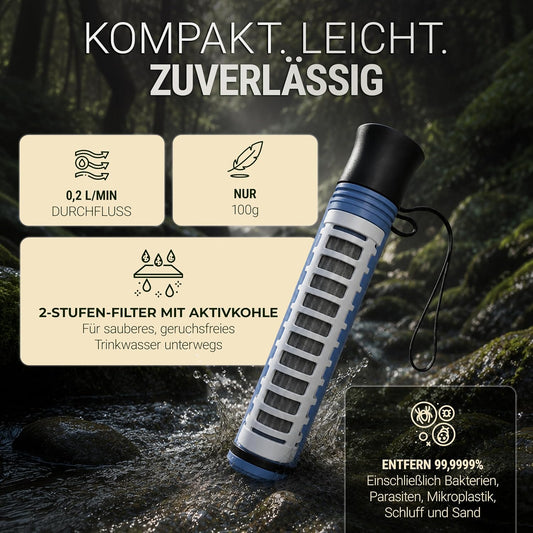
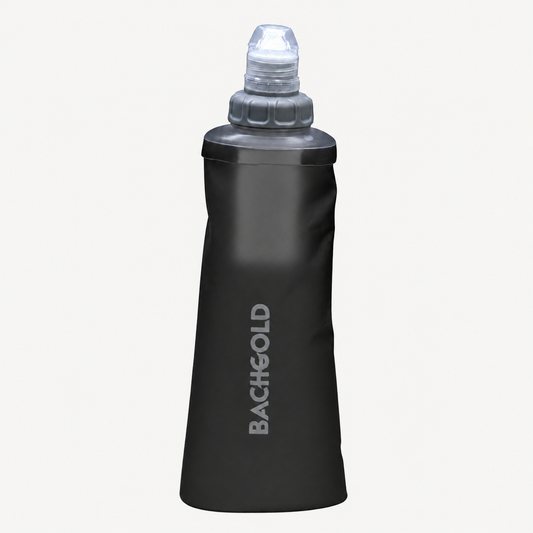
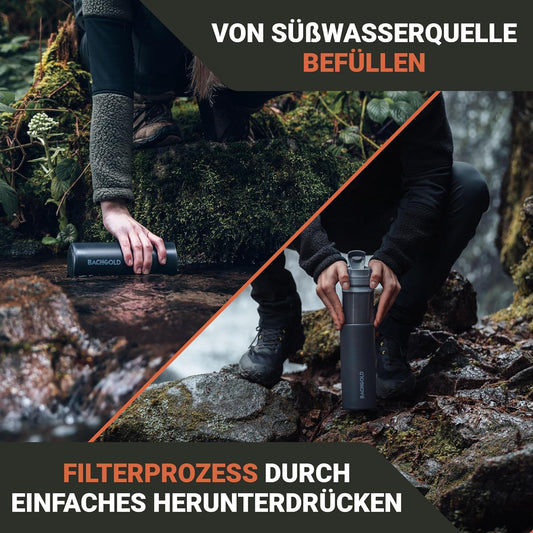
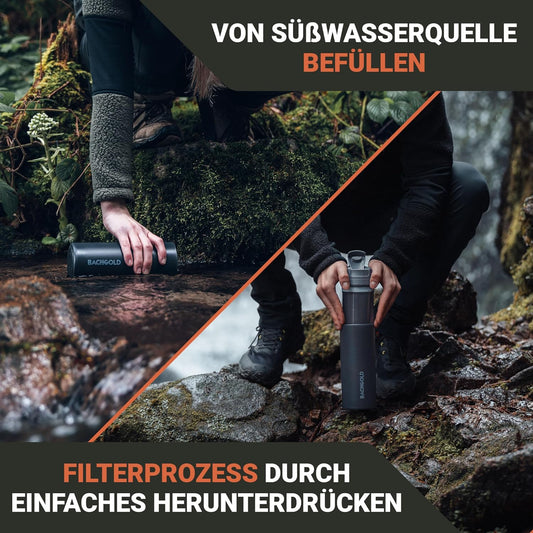
If your route passes a reliable stream or lake, bringing a filter means you don’t have to carry every liter of water yourself. A self-press filter, like the BACHGOLD press filter, removes bacteria and protozoa from stream water, so you can refill as you go. Just make sure to let very muddy water settle before you filter it so the filter doesn’t clog.