How to Stay Hydrated While Hiking: How Much Water Do You Really Need?
Jerome StolzTwo hikers can leave the same trailhead at the same time and finish the day with totally different amounts of water left in their packs. One still has a liter to spare. The other's bottle has been dry for an hour. Heat, elevation, how hard each one pushed, and how much each one sweats all change how much water a hiker gets through.
So, how much water should you bring on a hike? There is no single number that works for everyone. This guide will show you how much water to drink and carry for the hike you're actually doing, starting with the signs your body gives you when it needs a refill.
Signs of Dehydration to Watch for While Hiking
The signs of dehydration can easily be missed, especially as some of it creeps up on you slowly. On a hot day or a long climb, you lose fluid steadily for hours before your body starts showing signs.
That is why it’s important to know the early signs so you can slow down, find some shade, and hydrate yourself before things get even worse. Common early signs of dehydration include:
-
Thirst: Feeling thirsty means your body is already asking for water. Drink water as soon as you can.
-
Dry mouth: A dry mouth, lips, and tongue are often one of the first signs of dehydration. It typically shows up right when you start losing more fluid than you're taking in.
-
Darker urine, or less of it: Clear or pale urine means things are fine. Anything darker is your cue to drink.
-
Headache: A headache can come with dehydration, though plenty of other things on a hike can cause it too.
-
Unusual tiredness: Feeling more worn out than usual can be a good reason to rest and check how much water you've had.
-
Dizziness or light-headedness: Both can come with dehydration. Pay attention if the feeling sticks around after you sit down.
These signs can overlap with other issues. Heat, altitude, hard effort, or just skipping a meal can feel a lot like early dehydration. Weigh them against the conditions you're in, how much water you've actually had, and how your body usually handles a day like this.
How Much Water Should You Drink While Hiking?
Most hikers do well with 400 to 800 mL (0.4 to 0.8 liters) an hour on the move, a range backed by a 2023 review of hydration research for high-altitude hiking.
Use the lower end as a starting point for an easier, cooler hike and plan for more if you expect to sweat heavily. Then multiply your hourly estimate by the time you’ll spend hiking to work out how much water to carry.
How Much Water Should You Bring on a Hike?
Once you know your hourly number, multiply it by the hours until your next reliable refill to get your target for that stretch.
Water needed = water use per hour × hours until the next reliable refill
Say you're going through 0.7 liters an hour with a refill four hours out. That's about 2.8 liters to get you there.
Carry more when it's hot, the trail is rough, or a marked water source could turn out dry or hard to reach. If there's no refill anywhere on the route, calculate for the whole hike instead.
Planning around refill intervals can help you avoid carrying more water than you need. Carry enough to reach your next reliable source, with a little cushion for delays or changing conditions. Extra weight beyond that could slow you down.
How to Prevent Dehydration on the Trail
Check how much water you have left at regular stops, especially before a long stretch without a refill point. That gives you time to adjust your plan before your bottle runs dry.
Here's what that looks like on the trail:
-
Start already hydrated: Drink normally in the day or two before your hike, so you begin already hydrated.
-
Drink when you need to: Your water estimate helps you plan what to carry, but you don’t need to follow it like a drinking schedule. Take a drink when you feel thirsty.
-
Slow your pace in the heat: Ease up, take breaks, and find shade when conditions get hot, since heat increases how much you sweat.
-
Keep water within reach: Keep it somewhere you can grab easily while walking or during short breaks.
-
Know your next water source: Check your route ahead of time and know how long it is until your next reliable refill. Build your plan around sources you know are reliable, and treat any unconfirmed source you find flowing as an extra, not something to count on.
-
Treat natural water before you drink it: Rivers, streams, lakes, and springs can carry microorganisms even when they look clean, so treat anything you collect before drinking.
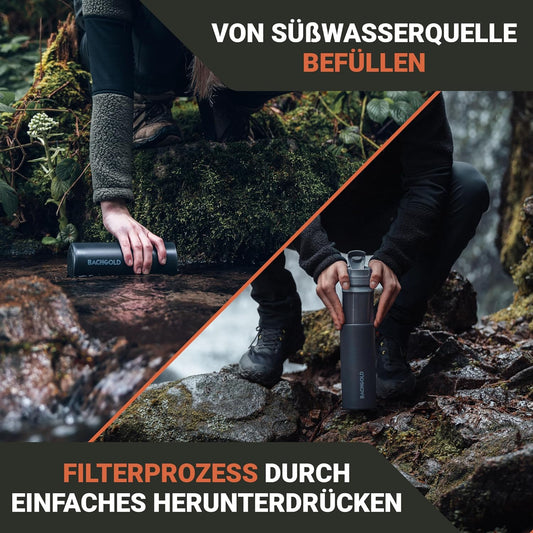
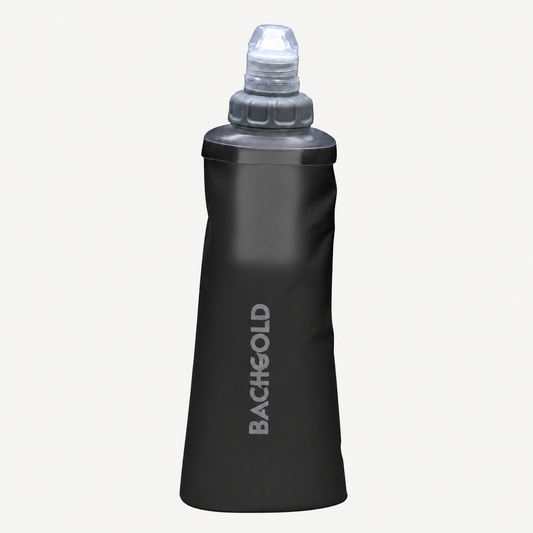
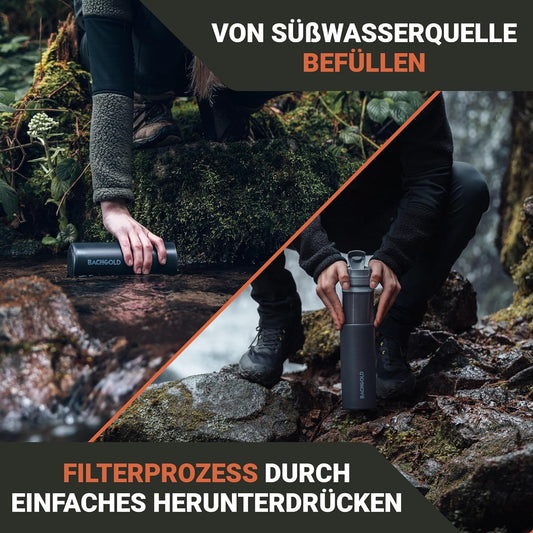
Let your thirst set the pace on the trail. A squeeze filter, like the BACHGOLD Squeeze, lets you treat water straight from the stream and keep moving.
Can You Drink Too Much Water on a Hike?
Yes. If you drink more than your body can process, you risk diluting the sodium in your blood, a condition called exercise-associated hyponatremia (EAH). It's uncommon, but worth knowing about on a long hike.
To reduce the risk:
-
Drink to your thirst.
-
Let your body set the schedule instead of forcing extra sips.
-
On long hikes, check in with how you feel and adjust from there.
If you experience headache, nausea, vomiting, confusion, unusual behavior, loss of coordination, seizures, or collapse, get medical help right away.
Electrolytes for Hiking
You lose sodium and other electrolytes through sweat. These minerals help your body maintain fluid balance and support normal muscle and nerve function. For most short or moderate hikes, regular food and water are enough.
On longer hikes or days when you sweat heavily, an electrolyte drink or a salty snack can help replace some of what you’ve lost. Follow the product’s directions if you use a drink mix, and eat and drink according to your needs along the way.
How to Carry Water on a Long Hike
For a long hike, a practical setup is usually a primary water container plus a way to refill along the route. This lets you carry enough water for each stretch without carrying the entire supply from the start. That matters because water adds weight quickly, as one liter of water weighs about 1 kg.
Here's what most hikers carry:
-
Hydration reservoir: Easy to drink from while walking, and handy when you want frequent access to water.
-
Water bottles: Simple to refill and easy to keep treated and untreated water separate.
-
Soft water bottles: Lightweight and collapsible when empty, good as backup capacity.
-
Water filter or treatment system: Useful whenever there's a natural source along the route, since you can treat what you collect instead of carrying it all.
For longer routes, check the location, reliability, and seasonal availability of water sources before you leave. Confirm what you can, and if your route depends on a refill point, carry enough to reach it and keep a backup plan ready.
Plan Your Water Before Your Next Hike

You've got the numbers, you know your body's signals, and you know where the line sits between too little water and too much. Before you leave, take a few minutes to check your route and your water sources. Then make sure you've got a water treatment plan for whatever you find along the way.
A reliable water filter can be part of that plan, especially when you're relying on natural water sources along the route. All BACHGOLD filters remove bacteria and protozoa. If you also need protection against viruses, the Squeeze and Straw remove 99.99% of them. They work without chemicals, batteries, or waiting for purification tablets. Part of every purchase supports the Viva con Agua Nepal drinking-water project.