Water Filter vs Water Purifier: Which One Do You Need?
Jerome StolzPlenty of hikers carry a purifier when a filter would have done the job, and pay for it in pack weight. The difference between the two comes down to one thing: viruses. A filter removes bacteria, protozoa, sediment, and microplastics. A purifier does all of that and also removes or deactivates viruses.
For most hiking, backpacking, and camping in Europe and North America, a filter is enough. The real risks in mountain streams and alpine lakes are bacteria and protozoa, and a hollow fibre filter removes both.
Viruses only become a concern once water picks up human sewage, which is far more common across parts of Southeast Asia, South America, and South Asia. That is where a purifier becomes important.
Below you will find what each system removes, what slips through, which format suits your trip, and the right pick for your water source, from multi-day treks to emergency kits to home tap water.
What Does a Water Filter Remove?
A water filter removes the contaminants in freshwater that are large enough to be caught in its pores. That includes bacteria, protozoa, sediment, and microplastics.
Bacteria and Protozoa
A hollow fibre filter removes bacteria and protozoa from freshwater through microscopic pores. That covers bacteria such as E. coli, Salmonella, and Campylobacter, and protozoa such as Giardia and Cryptosporidium, the most common biological contaminants in rivers, lakes, and mountain streams across Europe and North America.
The U.S. Centers for Disease Control and Prevention reports that Cryptosporidium and Giardia remain among the leading causes of parasite-related drinking water outbreaks in the United States. Cryptosporidium is the harder of the two to deal with because it resists chlorine, so physical filtration is the dependable way to remove it.
Filter performance is measured in log reduction values, or LOG, the standard for counting how many microorganisms a filter removes. Each step up the scale removes ten times more.
The World Health Organization sets its highest tier at a minimum 4 LOG reduction (99.99%) for both bacteria and protozoa, and quality hollow fibre filters tested under protocols such as NSF P231 publish these figures to back their claims.
Sediment, Microplastics, and Water Clarity
Hollow fibre filters also remove sediment, suspended particles, and microplastics larger than the pores. This clears up water drawn from glacial streams, mountain rivers, or runoff-fed lakes.
Sediment is not always a health risk, but removing it improves taste and appearance, and clearer water is easier to drink through on a long hiking day.
What a Water Filter Does Not Remove
A standard hollow fibre filter leaves two things behind: viruses and dissolved chemicals. Viruses are far smaller than bacteria and protozoa, small enough to slip through the pores untouched. The common waterborne ones, Norovirus, Hepatitis A, and Rotavirus, all fall into that range.
Across Europe and North America, viral contamination of natural freshwater is rare, and the real risks are bacteria and protozoa, which a hollow fibre filter handles.
Viruses only become a concern when there's untreated sewage, poor sanitation, or many people upstream. That's when you'll want a purifier, or at least chlorine dioxide tablets as a backup.
Dissolved chemicals are the other blind spot. Nitrates, PFAS, pesticide residues, and heavy metals like lead and arsenic are simply too small to be captured by the membrane.
For those, you need activated carbon, reverse osmosis, or ion exchange. No filter, however fine, handles them on its own.
Does a Water Purifier Remove Minerals?
Some purifiers do, though most leave minerals alone. The main exception is reverse osmosis, which pulls out helpful minerals like calcium and magnesium along with the contaminants it's meant to catch, while UV and chemical purifiers don't affect them.
For short trips or outdoor use, this generally isn't worth worrying about, since the World Health Organization notes that water with the minerals removed isn't usually a health concern in the short term.
It tends to matter more at home, where people who rely on reverse osmosis every day often choose a model that adds the minerals back, which also improves the taste.
Filter vs Purifier at a Glance
The difference between the two systems comes down to one row in the table below.
| Contaminant | Water Filter | Water Purifier |
|---|---|---|
| Sediment and turbidity | Removes | Removes |
| Bacteria (E. coli, Salmonella) | Removes | Removes |
| Protozoa (Giardia, Cryptosporidium) | Removes | Removes |
| Microplastics | Removes | Removes |
| Viruses (Norovirus, Hepatitis A) | Reduces | Removes or reduces |
| Heavy metals (lead, arsenic) | Reduces only with an added carbon stage | Reduces with RO or a carbon stage |
| PFAS and chemical contaminants | Reduces only with an added carbon stage | Reduces with RO or a carbon stage |
| Dissolved minerals and salts | Does not remove | Removed by reverse osmosis only |
Note: whether a filter or purifier removes viruses depends on the specific product and technology. Always check the independent test data before purchase.
Which One Do You Need? Choose Based on Your Water Source
The best choice is not determined by the product. It is determined by the water source and the contaminants most likely to be present.
Hiking and Backpacking in Europe or North America
Best choice: Water filter
For most trips across the Alps, Pyrenees, Dolomites, Scandinavia, and the wilder parts of North America, a water filter is usually all you need, because the main risks are bacteria and protozoa, and that's exactly what a hollow fibre filter is built to remove.
The exception is busy, high-traffic trails, where the bigger threat is other hikers rather than the water itself.
The Appalachian Trail Conservancy and the U.S. National Park Service have both warned about norovirus among hikers, including a suspected norovirus outbreak in Shenandoah National Park in 2025. On routes like that, it's worth packing purification tablets as a backup.
International Travel
Best choice: Water purifier
In some parts of Southeast Asia, South America, South Asia, and Sub-Saharan Africa, viruses can be more of a concern than they are in remote mountains, often where sanitation infrastructure is limited and untreated sewage can reach water sources.
Because most standard filters don't reliably handle viruses, you'll want one that's proven against them, like the Bachgold® Squeeze or straw filter, which are highly effective against viruses, when you're unsure about local water quality.
Municipal Tap Water in the UK and Europe
Best choice: Water filter
Tap water in the UK and Europe is already treated to strict standards, so here the goal is taste, not safety. The UK Drinking Water Inspectorate reported that public supplies in England met regulatory standards 99.97% of the time in 2023. Most people filter tap water to improve the taste, cut chlorine, or deal with limescale rather than to remove anything harmful.
Emergency Preparedness
Best choice: Water filter with a backup purification method
When floods, power outages, or infrastructure failures hit, water quality can change without warning, and reliability matters more than convenience.
A lightweight filter that works without electricity or batteries is usually the most practical thing to keep in an emergency kit, while a gravity-fed system is easier if you need to treat larger volumes for a household or a longer outage. If viruses are a possibility, adding purification tablets covers that gap.
Private Well Water
Best choice: Test first, then choose the appropriate treatment system
Private wells aren't treated by any water authority, so the quality depends entirely on what's around them. Rainfall, farm runoff, septic systems, and local geology can all push bacteria, protozoa, nitrates, arsenic, and other contaminants into groundwater, which is why the U.S. Environmental Protection Agency recommends testing your well water regularly before you choose a treatment system.
A test tells you what's actually in the water, so you can match it to the right fix, whether that's a filter, a purifier, an activated carbon system, or reverse osmosis.
Which Water Treatment System Is Best for Your Trip?
Choosing between a filter and a purifier is only half the decision. The other half is the type you carry, which changes the weight, the speed, and how easily you get a drink on the trail.
1. Squeeze and Press Filters
Best for: Hiking, backpacking, and travel
Squeeze and press filters are the most common choice for outdoor use. You fill a bottle or pouch, apply pressure, and drink straight from the filter without any waiting. Because they're light, compact, and need no batteries, chemicals, or setup, they suit solo hikers and travellers who want a quick drink during the day.
Their main limit is volume, since they treat a bottle at a time rather than enough for a whole camp.
2. Gravity Filters
Best for: Groups and base camps
Gravity filters use a suspended water reservoir that allows water to flow through the filter without pumping or squeezing.
This makes them well-suited to families, group trips, and base camps, where treating several litres at once saves refilling a single bottle over and over. They're less practical on the move, though, since they need somewhere to hang and a little time to run.
3. Emergency and Compact Filters
Best for: Emergency kits and backup use
Compact filters are made for situations where space and weight are tight. They fit easily into a pocket, glovebox, or emergency kit, and most connect directly to a standard water bottle.
They are not usually the fastest option, but they provide a reliable backup if your primary water treatment system fails.
4. UV Water Purifiers
Best for: Travel and virus protection
UV purifiers work differently from mechanical filters. Rather than straining water through a membrane, they use ultraviolet light to deactivate bacteria, protozoa, and viruses within seconds, without affecting the taste.
The drawback is that they depend on batteries or a charge, and they work less well in cloudy water, where suspended particles can shield microbes from the light. For that reason, UV purifiers are usually paired with a mechanical filter rather than used alone.
Quick Comparison
| Type | Best For | Advantages | Limitations |
|---|---|---|---|
| Squeeze and press filters | Hiking and backpacking | Light, fast, no batteries | Treats one bottle at a time |
| Gravity filters | Groups and base camps | Filters large volumes with little effort | Less practical on the move |
| Emergency and compact filters | Backup and emergency kits | Compact and lightweight | Slower, lower capacity |
| UV Purifiers | Travel and virus protection | Effective against viruses, fast treatment | Requires power and clear water |
What Should You Look for in a Water Filter or Purifier?
Not all water filters and purifiers perform the same. Before choosing a system, focus on these five factors.
1. Independent Testing
The single most important thing to check is independent testing. Look for products that publish results against recognised testing standards instead of relying on their own marketing claims.
The most widely used standard is NSF P231, which measures how well a device removes or reduces bacteria, protozoa, and viruses under controlled lab conditions. If a company can't show test data, treat its performance claims with caution.
2. LOG Reduction Performance
LOG reduction values show how effectively a filter or purifier removes microorganisms, and each step up the scale removes ten times more.
-
LOG 4 removes 99.99%
-
LOG 5 removes 99.999%
-
LOG 6 removes 99.9999%
-
LOG 8 removes 99.999999%
The World Health Organization notes that higher LOG values mean greater protection against waterborne pathogens. A good filter or purifier publishes these numbers rather than relying on vague phrases like "removes harmful contaminants."
3. Filter Capacity
Capacity tells you how much water a filter can treat before the element needs replacing. A higher-capacity filter often costs more up front but works out cheaper per litre over its life, so it's worth weighing the purchase price against how often you'll need to replace it.
4. Weight and Packability
For hiking, backpacking, and travel, weight is worth paying attention to. Many hollow fibre filters are light enough to sit in a side pocket without weighing you down, but check whether the listed weight covers everything you need to use it, not just the cartridge.
5. Dependability in the Field
The best water treatment system is the one that still works when conditions aren't ideal. Battery-powered devices can run out of charge, and electronics can fail, while mechanical filters like hollow fibre work without electricity, charging, or moving parts. That makes them a dependable choice for the outdoors and for emergency kits.
Water Filter and Water Purifier Buying Checklist
Before buying a water filter or purifier, run through these questions.
-
Has it been independently tested?
-
Does it publish its LOG reduction results?
-
Is the capacity right for your needs?
-
Is the weight practical for travel or backpacking?
-
Can it work without batteries or electricity?
Final Verdict: Water Filter vs Water Purifier
Neither one is universally better. The right pick depends on where you're drinking. For hiking, backpacking, and camping across Europe and North America, a water filter is usually enough, since it gives you fast, lightweight protection against the bacteria and protozoa found in mountain water.
A purifier is the safer bet when viruses are a real risk, mainly on international trips or anywhere water may be affected by human waste. As a rule, the further you move from remote natural sources toward crowded, populated areas, the more a purifier is worth carrying.
In short, carry a filter for hiking and remote trails, and choose a purifier when virus protection is the priority.
Safe drinking water starts with the right filter.
Discover the Bachgold® range built for hiking, backpacking, and travel.
Shop Now →Bachgold® Water Filters for Hiking, Travel, and Emergency Preparedness
If you've decided a filter is what your trips call for, here's one built for exactly that. Bachgold® develops water filtration systems for hiking, travel, and emergency preparedness. The company was founded in Switzerland by Jerome and Laurenz, who wanted a simpler way to drink safely from alpine streams without pumps, chemicals, or electricity.
The result was the world's first self-press hollow fibre water filter. Today, every Bachgold® filter uses a hollow fibre membrane and was tested by an independent laboratory according to the NSF P231 protocol, where it met the requirements. All materials are BPA-free, and the full capacity figures are on the product page.
Which Bachgold® Filter Is Right for You?
Bachgold® Squeeze
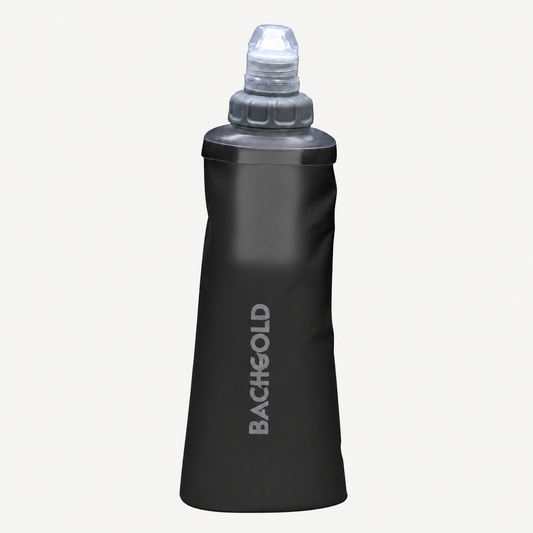
A lightweight, compact filter for hikers, backpackers, and travellers who want simple water treatment for everyday outdoor use.
Bachgold® press filter
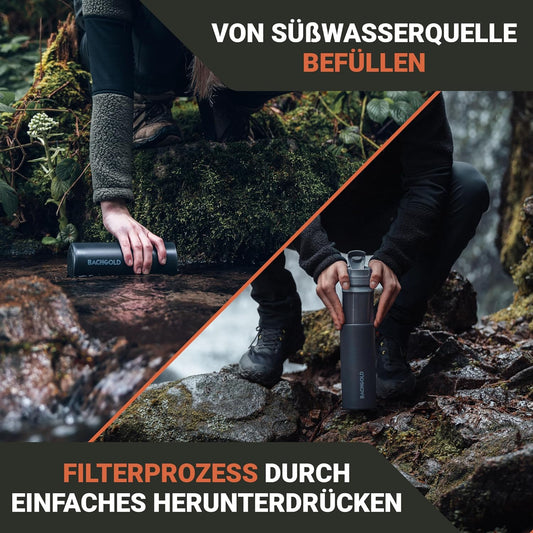
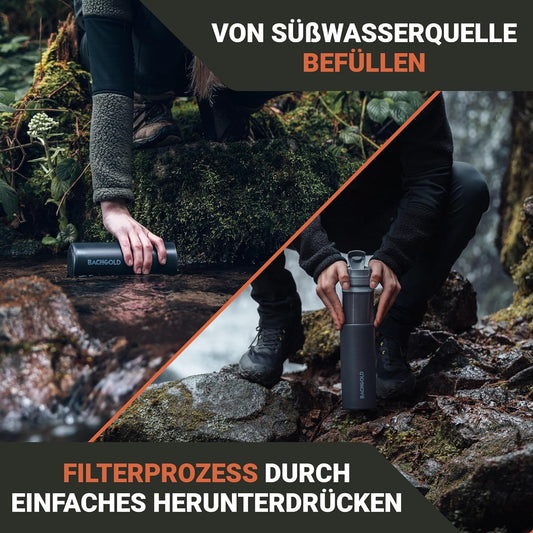
An all-in-one bottle and filter for hikers and travellers who prefer to fill, press, and drink straight from the source.
Bachgold® XL
A higher-volume filter for families, group treks, camping, emergency, and base camps where you need to treat larger amounts of water at once.
Why Outdoor Users Choose Bachgold®
Bachgold® was named Product of the Year 2023 by AutoBild, rated #1 by testsieger.de, and earned a Preistipp recommendation from CHIP.de.
Whether you're heading out backpacking, travelling abroad, or putting together an emergency kit, Bachgold® gives you safe drinking water without batteries, chemicals, or extra fuss. Part of every purchase goes into the Viva con Agua Nepal drinking water project, for the same reason, and the full range is on the product page.
Frequently Asked Questions
How long does a water filter last? +
Can a water filter remove PFAS? +
Can I use a water filter in freezing temperatures? +
Can a water filter remove saltwater? +
Do water purification tablets work as well as a water filter? +
References
The following sources were used to research this article.
- Centers for Disease Control and Prevention, Surveillance of Waterborne Disease Outbreaks Associated with Drinking Water, US, 2015–2020
- World Health Organization, Performance targets for household water treatment products (Housing and Health Guidelines, Table 8.5)
- World Health Organization, Guidelines for Drinking-water Quality, 4th edition
- NSF/ANSI Protocol P231, Microbiological Water Purifiers
- European Union, Directive 2020/2184 on the Quality of Water Intended for Human Consumption
- UK Drinking Water Inspectorate, Drinking Water 2023, England
- U.S. Environmental Protection Agency, Protect Your Home's Water (Private Wells)
- Appalachian Trail Conservancy, Norovirus & Stomach Bugs
- Backpacker, Norovirus Outbreak on the Appalachian Trail, 2025