In different parts of the world, the tap water locals drink every day without trouble can still leave you sick for several days. The water looks clean and tastes fine, so you have no reason to think twice. But the germs behind travelers' diarrhea and other common waterborne illnesses carry no color, smell, or taste. One glass, or the ice in a cold drink, is enough to pass them on.
This is common, and it is also avoidable once you know your water. The CDC estimates that on trips to higher-risk destinations, between 30% and 70% of travelers come down with travelers' diarrhea, most often from food or water. This guide walks you through how to judge the risk where you are going, when to switch to sealed or treated water, and how to match the method to your trip.
Know Your Water Source Before You Drink
Where your water comes from tells you most of what you need to know about the risk. Tap water from a city supply, bottled water, and a stream in the hills each carries a different level of risk, so each one needs its own approach.
| Water source |
Generally safe? |
What to know |
| Municipal tap water |
Depends on location |
Follow local health guidance and advisories. |
| Factory-sealed bottled water |
Usually yes |
Check that the seal is intact before drinking. |
| Hotel or accommodation water |
Depends |
Confirm whether it comes from treated municipal water or a private supply. |
| Rivers, lakes, springs |
Usually no |
Treat before drinking, even if the water looks clean. |
Once you know where your water comes from, the next step is knowing whether local tap water is considered safe at your destination.
Can You Drink Tap Water Abroad?
Whether tap water is safe to drink abroad depends on local conditions. The quickest way to judge the water is to watch what locals do. If they drink straight from the tap without thinking, there is a good chance it is fine for you too. If they reach for bottled water, do the same. Keep in mind that the locals may handle water that would still make you ill, so treat it as one clue and fall back on local health advice or treated water when you are unsure.
The local test is not foolproof. Water quality can change between a city and the countryside, or drop after flooding or water pipe repairs, even somewhere with modern infrastructure. When you are unsure, carry a water filter or buy factory-sealed bottled water, and check the seal before you drink.
Why Do Travelers Get Sick While Locals Don't?
Travelers get sick more often than locals because their bodies have not met the local germs before. People who live there deal with those same germs regularly and often report fewer episodes, though lasting immunity is not guaranteed. That does not mean the water is truly safe, since locals get sick too, and newcomers are simply more likely to.
Even a small amount can be enough to make you ill. Rinsing a cup, washing fruit or salad under the tap, or swallowing a little shower water can each carry enough germs to cause trouble, so when you are not sure the water is safe, treat it as unsafe until you can confirm otherwise.
Are Travel Water Filters Enough?
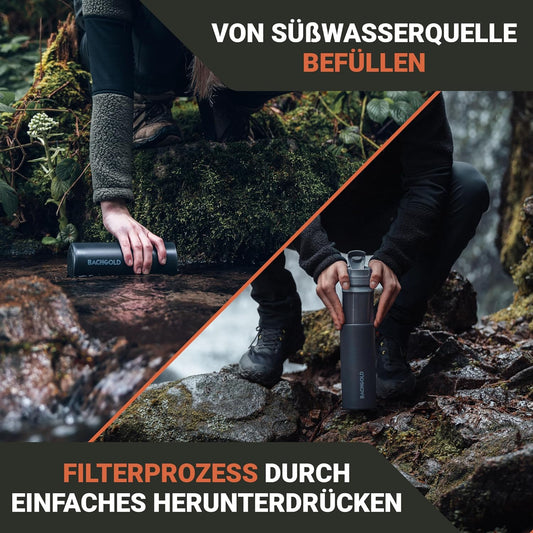
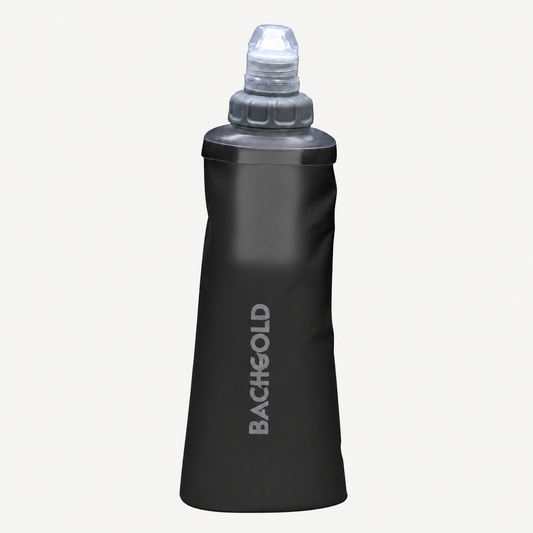
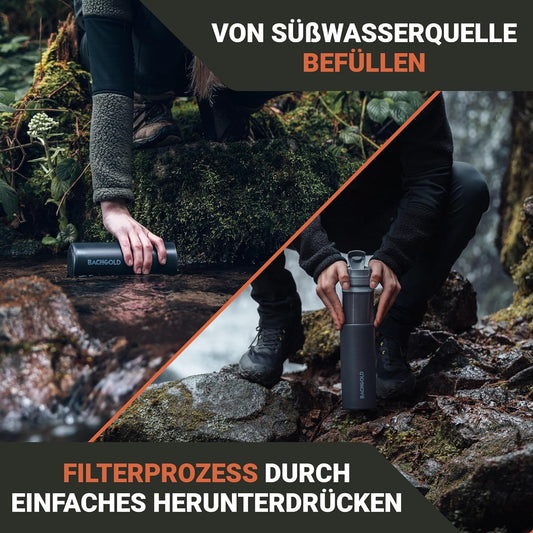
For many trips, a good travel filter is all you need. It reduces bacteria and protozoa and clears out sediment, which covers most of what makes river and stream water unsafe. The BACHGOLD Squeeze does this the moment you scoop from the source.
To judge a filter, look for one that has been independently tested against a recognized standard. That tells you more than any numbers on the box. Your destination matters as much as the filter itself. Where bacteria and protozoa are the concern, a good filter is usually enough, and where viruses are also a risk, you may need a purifier built for them.
Stay Safe With Your Drinking Water While Traveling
Traveling to a destination with an unreliable water supply? Discover lightweight BACHGOLD water filters for travel and treat water before you drink it.
Explore BACHGOLD Water Filters →
How to Choose a Travel Water Filter
When your trip is planned around nature, your water no longer comes from a tap. It comes from rivers and streams that can look clear and cold and still carry bacteria and protozoa too small to see, so the filter you pack matters. The best one depends on how and where you travel.
1. Go Light for Hiking and Backpacking
For a day hike or a fast-moving trip, pick a lightweight filter that is easy to carry and use right at the stream. The BACHGOLD Squeeze and straw filter both fit this, removing bacteria and protozoa and reduced viruses.
2. Go High-Capacity for Accommodation and Group Trips
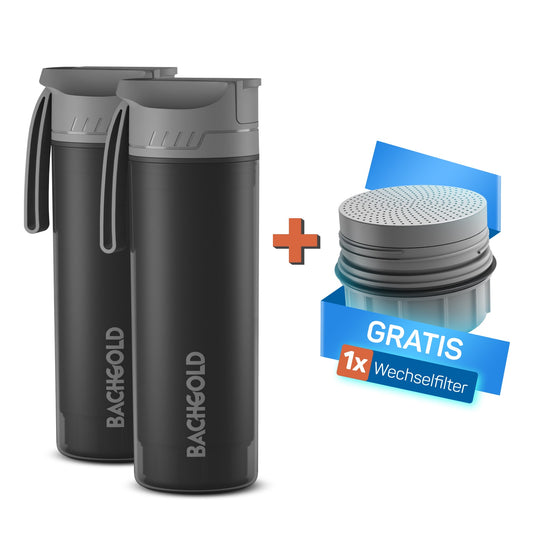
For a stay without safe tap water, a road trip, or group use, a higher-capacity filter means fewer refills. The BACHGOLD press filter is built for that kind of volume.
3. Check for Independent Testing
Whatever the size, choose a filter that has been independently tested against a recognized standard. That tells you more about real-world performance than any spec sheet.
4. Know What a Filter Cannot Do
No portable filter fixes every water problem. Filters handle the microbes in untreated water, but dissolved chemicals, heavy metals, and salt need different treatment.
Drink Safely, City or Trail
Get the water right, and one bad glass never costs you two days of your trip. City tap or mountain stream, you now know how to judge what is in front of you and how to handle it.
Every BACHGOLD filter reduces bacteria and protozoa, and the Squeeze and Straw reduce viruses on top of that. Nothing to mix, nothing to charge, and each one is light enough to forget until the tap in front of you looks doubtful.
A share of what you spend goes to the Viva con Agua Nepal drinking-water project, so cleaner water reaches people who cannot simply pack a filter, and the full range is on the product page.
Shop the BACHGOLD filter today!